
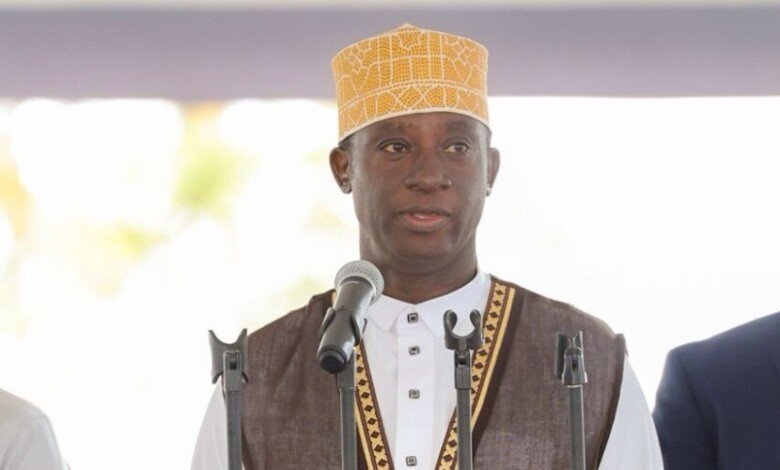
Prince Kassim Nakibinge has finally resigned from the Uganda Muslim Education Association Limited (UMEA), deepening a growing dispute over the ownership and founding history of Kawempe Muslim Secondary School.
Nakibinge’s resignation is contained in resolutions filed with the Uganda Registration Services Bureau (URSB), weeks after UMEA admitted the registered trustees of the Juma and Zukulu Muslim Group in Uganda as members.
The resolutions followed a UMEA Board of Directors meeting held on April 27, where the organisation accepted the resignation of Nakibinge and five other members—Isa Lukwago, Juma Yusef Walisumbi Kigozi, Muhamad Ssebulime, Elias Ssevviiri and Abubakar Kakembo Sekyaya.
The board also recorded the death of Ibrahim Seguya, who consequently ceased to be a member and subscriber.
But in a significant restructuring of the association, UMEA at the same meeting admitted four institutional bodies into its membership.
They include the registered trustees of the Uganda Muslim Community, Kibuli; the registered trustees of the Office of the Supreme Mufti; the registered trustees of the Young Men’s Muslim Association; and the registered trustees of the Juma and Zukulu Muslim Group.
The changes were incorporated into amendments to UMEA’s memorandum and articles of association and subsequently filed and stamped by URSB on June 25, 2026.
SCHOOL FIGHT
The shake-up comes as UMEA battles a High Court case over who should be recognised as the lawful founding body of Kawempe Muslim Secondary School.
The Juma and Zukulu trustees have sued UMEA, the school’s Board of Governors and the Attorney General, asking the court to declare them—not UMEA—the lawful founding body of the school.
The trustees contend that Muslim stakeholders meeting at their Kawempe headquarters on March 25, 1984 resolved to establish the school.
They further claim they provided about 5.3 acres of land on Kyadondo Block 208, Plot 169, where the school was subsequently established.
A key argument in their case is that UMEA Limited could not have founded a school established in 1984 because the company was incorporated in June 1995—about 11 years after the school was established.
The trustees are also challenging the composition of the current Board of Governors, arguing that they should have been involved in its appointment.
Under Uganda’s education framework, founding bodies have a role in the composition of Boards of Governors.
CONFLICTING HISTORY
The court battle has brought to the fore competing accounts of Kawempe Muslim Secondary School’s origins.
A parliamentary report on government-aided schools lists the institution among schools founded by UMEA and gives its establishment year as 1984.
However, an account published by the Uganda Muslim Supreme Council and attributed to Dr Edris Sserugo Kasenene presents a more complex history.
According to the account, the school was established in 1984 through efforts involving Muslim leaders and the UMSC, while the Juma-Zukulu group provided premises before the school later moved to its current site.
An earlier account attributed to Kasenene similarly states that the school was inaugurated on March 2, 1984, at Kawempe Muslim Primary School before arrangements were made with the Juma-Zukulu group to accommodate it at Kyadondo Hill.
The competing accounts are now at the centre of a legal battle whose outcome could determine not only who is recognised as the school’s founding body, but also the role of the respective Muslim institutions in its governance.