
BY:SSEKIGUDDE TONNY
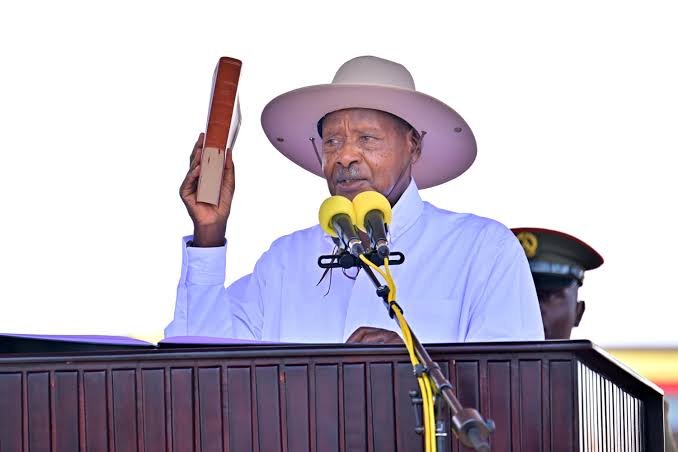
When President Yoweri Kaguta Museveni christened his new term of office as “Kisanja No Sleep,” he was not merely introducing another political slogan. He was issuing a call to action to every public servant, political leader and accounting officer. The President has repeatedly stated that this term must revolve around service delivery—ensuring that every government programme translates into tangible improvements in the lives of Ugandans.
That vision is both timely and necessary.
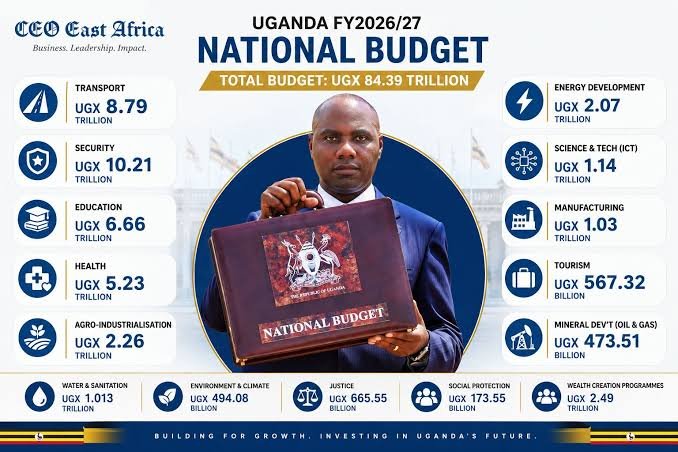
Uganda has entered the 2025/26 Financial Year with a national budget of approximately Shs72.3 trillion, the largest in the country’s history. It is a budget anchored on wealth creation, commercial agriculture, industrialisation, infrastructure, digital transformation and better public services. Yet, the true measure of this historic budget will not be the size of the figures announced at Kololo. It will be whether the ordinary Ugandan in Karamoja, Wakiso, Kisoro, Arua or Busia feels the impact through better roads, stocked health centres, quality schools, reliable electricity, clean water and increased household incomes.
This is precisely where the President’s “No Sleep” philosophy must find its greatest expression.
No amount of budgetary allocation can transform Uganda if corruption continues to consume resources meant for service delivery. The Inspectorate of Government has consistently estimated that Uganda loses between Shs9 trillion and Shs10 trillion annually through corruption, procurement fraud, ghost projects and abuse of public resources. That amount is equivalent to building thousands of classrooms, equipping referral hospitals, constructing hundreds of kilometres of roads and extending clean water to millions of Ugandans.
Corruption is therefore not simply a governance problem—it is the biggest enemy of service delivery.
The President has on several occasions warned that corruption steals from the poor. Every shilling diverted from a health centre means mothers lack medicines. Every inflated road contract means taxpayers pay more for less. Every ghost beneficiary on a government programme denies a genuine citizen an opportunity to improve their livelihood.
This is why “Kisanja No Sleep” should equally become “Kisanja No Corruption.”
Government’s flagship poverty eradication initiatives, particularly the Parish Development Model (PDM) and Emyooga, provide perhaps the greatest opportunity to translate government expenditure into household wealth.
The Parish Development Model was specifically designed to move the remaining subsistence households into the money economy by taking resources directly to Uganda’s more than 10,500 parishes. Likewise, Emyooga has supported thousands of SACCOs and enterprise groups with affordable capital to expand businesses, create jobs and improve incomes.
These programmes are fundamentally sound in design. However, their success depends entirely on integrity during implementation.
Where PDM money reaches the intended beneficiaries, farmers have invested in coffee, dairy farming, poultry, piggery and commercial agriculture. Small businesses have expanded, while household incomes have improved. Where Emyooga funds are managed transparently, communities have built sustainable revolving funds that continue supporting members years after receiving seed capital.
Unfortunately, isolated cases of mismanagement, political interference, ghost beneficiaries and delayed disbursement have undermined public confidence in some areas.
That is exactly why “No Sleep” should mean relentless monitoring of every parish, every SACCO and every accounting officer entrusted with public resources.
The President has often reminded Ugandans that government has already provided the policies, the infrastructure and the financing needed for socio-economic transformation. What remains is implementation.
Indeed, Uganda’s economy continues to register encouraging macroeconomic indicators. Poverty has declined to about 16.1 percent, electricity access has expanded significantly, more than 90 percent of Ugandans now live within five kilometres of a health facility, while internet connectivity and road infrastructure continue to improve. These achievements demonstrate that government investment is yielding results.
However, statistics alone do not satisfy citizens.
A patient wants medicine available when they visit a health centre.
A farmer wants a passable road to transport produce.
A teacher wants classrooms equipped.
A youth wants access to affordable capital.
A taxpayer wants assurance that public funds are not being stolen.
That is the essence of service delivery.
The “No Sleep” agenda should therefore not only apply to ministers and permanent secretaries. It should extend to Chief Administrative Officers, Resident District Commissioners, parish chiefs, engineers, procurement officers, health workers, teachers and every public servant whose salary is paid by taxpayers.
Uganda has the resources, the programmes and the political commitment to transform millions of lives. What is now required is discipline, transparency and accountability.
History will not judge this term by the number of speeches delivered or meetings convened.
It will judge it by whether PDM transformed households.
Whether Emyooga created sustainable enterprises.
Whether the Shs72 trillion budget produced measurable improvements in people’s lives.
Whether corruption was decisively confronted.
If those objectives are achieved, then President Museveni’s “Kisanja No Sleep” will be remembered not simply as a political slogan, but as the period when Uganda placed service delivery above bureaucracy, accountability above corruption and results above promises.
The author is the CEO of Yellow Checkers;a pressure group responsible for monitoring and implementing NRM’s manifesto