
WAKISO
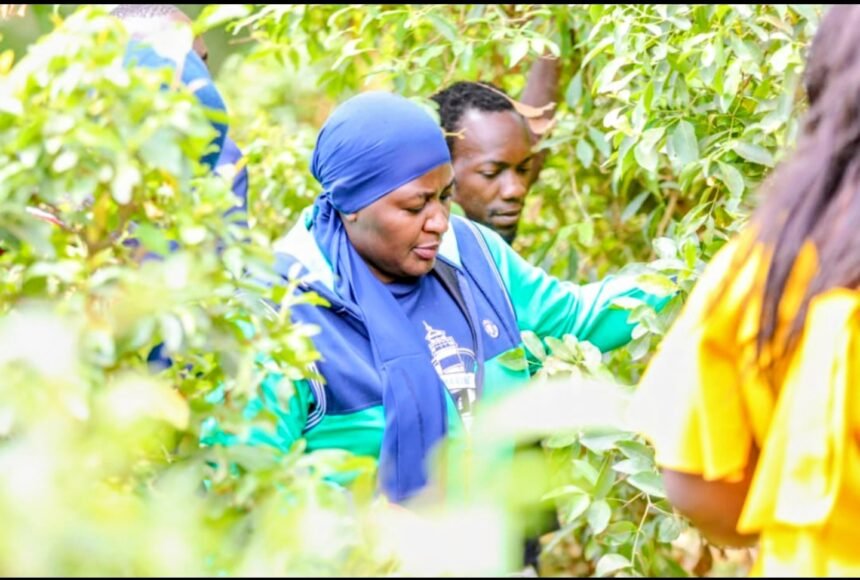
Senior Presidential Advisor on Political Affairs and Head of the Office of the National Chairman (ONC), Hajjat Hadijah Namyalo Uzeiye, has pledged to present the concerns of khat (mayirungi) farmers to President Yoweri Kaguta Museveni after meeting growers during an inspection tour in Wakiso District.
The farmers used the engagement to raise a number of pressing challenges affecting the lucrative enterprise, including water shortages, produce theft, high taxation and the influx of unregulated agricultural chemicals.
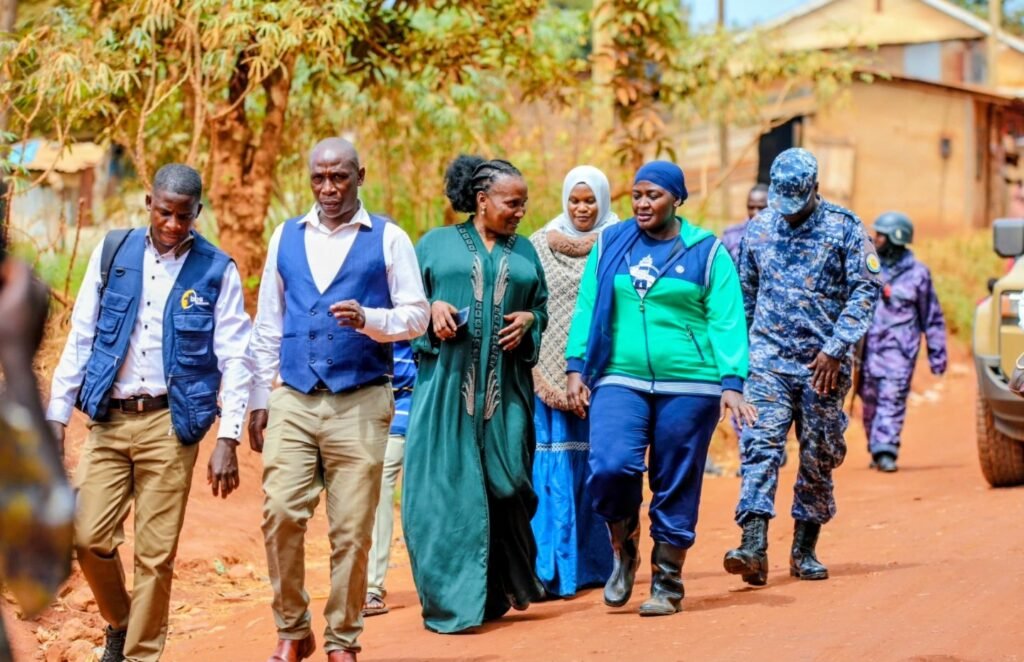
While touring a khat plantation in Kasenge, Hajjat Namyalo met farmers Ms. Nakitto Masitula and Mr. Asiimwe David, who outlined both the progress made in the business and the obstacles threatening production.
Mr. Asiimwe said the biggest challenge facing growers is the lack of reliable irrigation, noting that water scarcity continues to limit production throughout the year.
“We need support for modern irrigation facilities to improve productivity and ensure sustainable farming,” he said.
The farmers also complained about rampant theft of their produce, saying criminals frequently raid plantations and leave them counting heavy losses.
On taxation, they maintained that they are willing to pay taxes but appealed for a fair and business-friendly tax regime that would allow the sector to continue growing.
They further revealed that khat farming requires huge capital investment, with the cost of establishing a single tree ranging between UGX 50,000 and UGX 100,000.
Responding to claims that khat is harmful, the farmers defended the crop, arguing that it is widely used by long-distance drivers to stay awake and avoid drowsiness during night travel.
Mr. Asiimwe added that his plantation currently employs seven workers, whose families depend on the business for survival.
Hajjat Namyalo applauded the farmers for creating jobs and contributing to household incomes and the local economy. She urged them to comply with all legal and regulatory requirements, including acquiring the necessary licences.
She assured the farmers that their concerns on irrigation, security and taxation would be forwarded to the relevant government authorities for action.
The ONC boss later visited another khat farmer, Mr. Ssalongo William Sserwanga, in Nkungulutale, Ssisa Parish, where she continued consultations with growers.
Mr. Sserwanga appealed to the government not to abolish khat cultivation, saying the crop remains the backbone of many families’ livelihoods.
He also called for tighter regulation of agricultural chemicals imported into Uganda, arguing that the increasing availability of unregulated products has reduced productivity while driving up production costs.
Mr. Sserwanga stressed that farmers have no objection to paying taxes as long as the tax system remains fair and supports business growth.
He said income from khat farming has enabled many families to educate their children, build permanent homes and improve their standards of living.
According to him, his plantation currently provides employment to 30 workers who support their families through the enterprise.
Another farmer, Eng. Kaggwa Nabugera, said khat is valued not only for its economic importance but also for its medicinal uses among some communities.
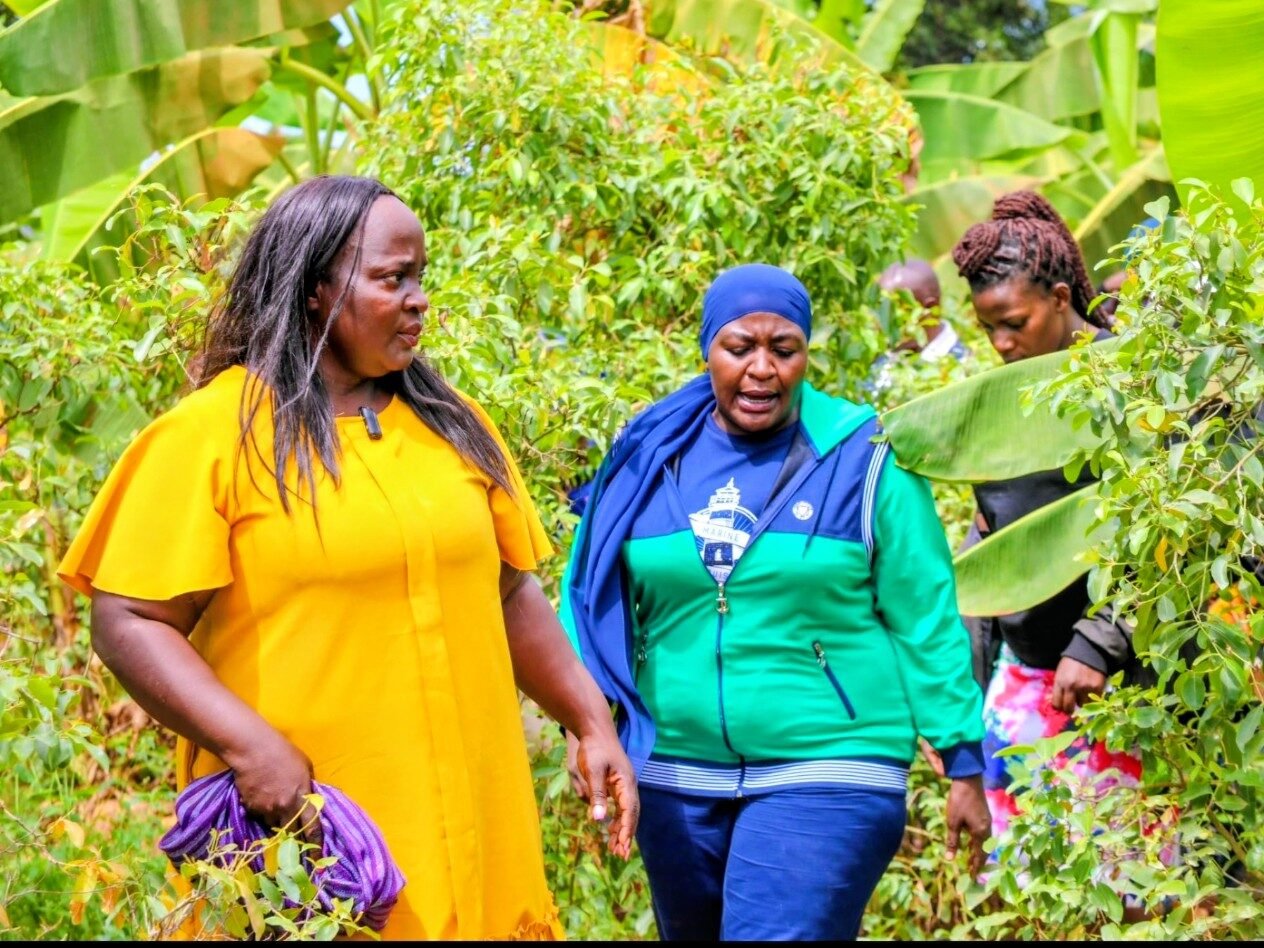
He commended Hajjat Namyalo for meeting farmers face-to-face and listening to their concerns, while reiterating that unregulated agricultural chemicals remain one of the biggest threats to the sector.
Addressing the farmers, Hajjat Namyalo revealed that reports indicate nearly 20 percent of the youth are consuming khat, a matter she said requires careful consultation with all stakeholders.
She emphasized that farmers, health experts, community leaders and government officials must work together to find lasting solutions that address public concerns while protecting the livelihoods of thousands of Ugandans who depend on the crop.
Acknowledging the economic importance of the industry, Hajjat Namyalo said any decision affecting khat farming must consider the welfare of workers and their dependants.
She further disclosed that farmers from Kasenge and neighbouring areas will be mobilised to formally petition President Yoweri Kaguta Museveni so that all stakeholders can reach a common understanding and an amicable solution that balances public interest with the livelihoods of farmers.
She concluded by urging farmers to remain united, continue working hard and invest in productive activities that will drive the socio-economic transformation of their communities.